
A very interesting topic- making oboe and bassoon reeds!
One might think, “How on earth does a person make a reed? Aren’t they mass manufactured on machines?”. You aren’t wrong, either. There are hundreds of thousands of reeds mass manufactured a year. However, many professional oboe and bassoon players still hand make their reeds and also sell them for a higher quality and better reed overall. These reeds tend to go for between $10 and $20 per reed. An individual couldn’t play without one, so why not learn how to customize and make them yourself?! Well, I’m here to teach you how! I’m using lots of visuals and photos because some of the terminology might not make sense to people who aren’t as familiar with double reeds.
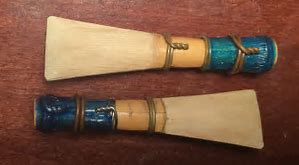
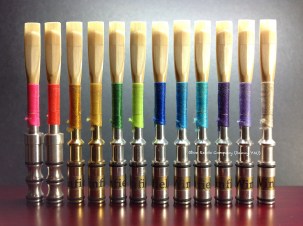
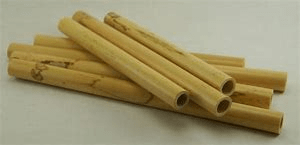
- The wood used to make oboe and bassoon reeds is called cane! It comes in tubes that you have to split into twos in order to really begin the process. This is usually done with a cane splitter or a razor blade. After this process is done, you must soak your cane for five to seven hours in lukewarm water.
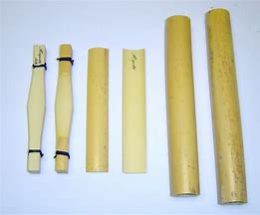
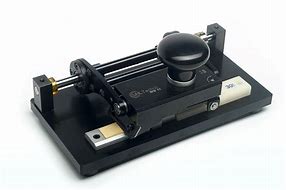
- Next, You have to place the wet cane in the pre-gouger and push it into the blade and turn the handle to slide it through the machine (Pictured below). Make sure you use the guillotine to cut the cane to the proper length, paying extra attention to the weaker side of the cane ensuring that you cut off the inconsistent parts so that you have healthy reeds. Next, use the gouger pictured below. Make sure the cane is placed firmly into the gouger so that it doesn’t move and push the knob part back and forth taking up the excess bark on the piece of cane, thinning it out until you get no more bark. Dry the cane for an entire day.
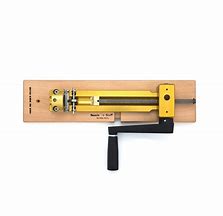
- Next, put the dry cane into the shaper tool pictured below and tighten the screws on either side of the shaper to make sure that the reed is firmly in place. Use your razor tool to make sure that any excess cane on the outside of the scraper tool is gone. After this process is done, soak the cane for two to three hours in luke-warm tap water. Then, use a profiler tool (also pictured below) to remove any excess cane you have, and this job is finished when no more of the cane can be removed.
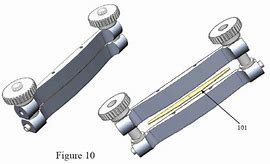
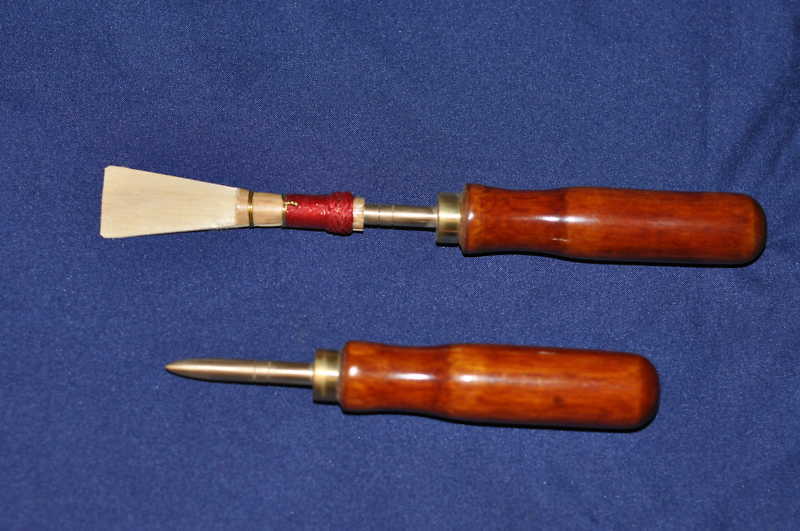
- Next, after removing a 60 degree wedge from all four sides of the cane, start placing wire 1/16th of an inch from the shoulder of it and soak it for a few minutes. Wrap dry twine around the reed almost from the top of the blade. Next, insert your mandrel tool until the reed reaches the forming line.
Thank you for reading, I hope you learned a thing or two!!!! -Rylie Martin
 Ms. Harner's EN100 Blog
I was wondering if they were really made of wood, but I never knew they could be made personally. I never knew making such a small piece of a complex set of instruments. I have never been able to play a wind instrument (or any instrument) so they and the people that can play them have always interested me. The techniques used and time it takes to memorize them and to add in the process of memorizing sheet music seems extremely daunting to me. The fact that high schooler can learn huge amounts of music is mind boggling to me.
– Jamie
LikeLike